A Welcoming Community of Faith Rooted in the Catholic Tradition.
Consecrated July 7, 1997
Restoring Morality
in American Domestic
Policy and Politics

A Pastoral Essay
Nuestra traducción al español se publicará pronto.
A policy is a set of rules, guidelines, or a plan of action adopted by a government, organization, or individual to guide decisions and achieve specific goals, like a company's hiring policy or a government's social or economic policy.
Politics involves the activities and power dynamics in group decision-making, governing societies, distributing resources, and managing power, encompassing everything from national governments (legislatures, executives) to ideologies (liberalism, conservatism) and policy issues like environment or trade, studying how power is acquired, used, and shared. It's about how people organize, rule, and resolve conflicts over things like rights, justice, and the common good, often studied as political science.
Morality in domestic policy involves using government power to enforce fundamental values, clashing over core beliefs on issues like abortion, euthanasia, and social conduct, rather than just economic efficiency, often sparking intense public debate and action. These policies, known as "morality policies," regulate social behavior and interpersonal conduct, reflecting deeply held ideas of "right" and "wrong" and validating specific societal norms, but scholars debate whether these policies have inherent moral content or if morality is merely a framing strategy.
Religious morality significantly influences domestic policy by shaping debates on issues like Social Justice and Peace, family, and religious freedom, drawing from faith-based ethics to facilitate societal good, though the U.S. Constitution mandates separation of church and state, creating tension between religious values and secular law, with ongoing debates over how deeply faith should inform public policy and whether religious freedom protects actions that conflict with secular laws. This interplay sees religious principles interpreted as universal morality by some, informing conservative stances, while others argue faith should remain private, advocating for broad religious liberty for all, including non-religious people, within a pluralistic society.

In the spirit of disclosure, I am proud to acknowledge that before ordination, I was and still consider myself a High School American and Social Studies History teacher. Each year I discovered new insights regarding our journey as a country and society and surprisingly I discovered that my later pastoral and sacramental passion for Social Justice and Peace was reinforced by the story of our American journey.
As we begin 2026, it might be an understatement to say that our Country, of which we have a responsibility to God to provide stewardship, has a broken compass. I am impelled to go one step further and state that our country has lost it compass and there seems to be little desire to retrieve it so we may begin the arduous journey of healing.
While acknowledging that some Constitutional scholars may not concur with me, I sincerely and respectfully believe and deeply embrace the principle and philosophy that our Constitution of the United States is “dynamic living document” designed to be flexible and adaptable to our ongoing growth and changing times, social growth and experiences and responsible judicial interpretation allowing it to remain relevant and forward focused without becoming obsolete and subverted by rigid extremist codes and dictates by the constitutional atheists of the moment. Our Framers intended our Constitution to endure for ages by infusing it with a framework that would enable to evolve and remain a perpetual foundation of our government and country.
I pray that I will not be alone in my secular* profession of faith in our Constitution.
*Secular refers to attitudes or beliefs that have no religious connections.
Throughout our history, the United States has faced many extreme political, economic, social and cultural challenges that have impacted the health and welfare of the morality and stability of our domestic policy and politics and prior to 2025 – our Constitution and our national family has survived these challenges.

Our National Train Wreck
As the first American since Grover Cleveland elected to non-consecutive presidential terms, Trump is carving in stone a legacy of chaos, psychological misadventures and perpetual need for self-aggrandizement. Assessments of the range of his impacts will surely change in the years to come as his second administration unfolds. Nonetheless, his effect and legacy on the institution of the presidency, the Republican Party, and key aspects of democratic governance in the United States are already evident.
Trump’s complete ignorance of politics and the presidency, aggressive and racist approach to immigration, his disengagement from foreign alliances, his tendency to praise autocrats and dismiss liberal democratic foreign leaders, his refusal to disavow white supremacist groups, sycophant cabinet members who lack credentials for their positions and his dispatching of the despicable ICE Gestapo to do his bidding has marked a profound historical break from American political orthodoxy and orthopraxis.
Pre 2025 Political Norms and Dynamics

Center-left and center-right describe political stances bridging the traditional left (social change, equality, government role) and right (tradition, individual freedom, limited government), with center-left leaning towards social equality, welfare, and government intervention for fairness, while center-right favors market solutions, fiscal responsibility, and preserving tradition, balancing social issues with economic conservatism, often supporting some government role but less than the left.
America's two-party system didn't emerge at a single moment but evolved, with the first clear division between Federalists and Democratic-Republicans forming by the 1790s, solidifying into distinct parties by the 1796 election; this evolved into the Democrats and Whigs by the 1830s, and then the modern Democrats and Republicans by the 1850s, making the mid-19th century a strong candidate for when the contemporary two-party structure began.
Since President Truman to Biden (excluding the first Trump term) Democratic and Republican administrations, for the most part established the tradition of either being center-left (D) or center-right (R) without going off into dangerous tangents, thus providing our nations with a degree of progress, security and stability. Sadly, by witnessing the power of evil, Trumpism has shattered that tradition akin to Humpty Dumpy – and chose to honor dictators and fascism.
But unlike poor old Humpty, I believe that we as moral and ethical individuals holds deep within us God’s grace to repair and restore that which has been shattered.
With your permission, I wish to cite, for your consideration, a bold scriptural precedent for us to embrace – cleansing the temple of our government.
In the Christian tradition, we have been taught that Jesus cleansed the Temple in Jerusalem by driving out merchants and money-changers, overturning their tables, and stopping the sale of sacrificial animals, declaring they had turned God's house of prayer into a "den of robbers" or "market". This event, recorded in all four Gospels (Matthew, Mark, Luke, and John), showed Jesus's authority, zeal for worship, and anger at the exploitation and corruption occurring in the Temple's Court of the Gentiles, symbolizing a need for spiritual purity and a challenge to religious leaders.
I believe that in combining both secular and faith-based applications, we can model Jesus and overwhelming embraces the “temple” of our government and expel the “den of corruption” that has set before them the goal of desecrating the house of our Founders.
Our Healing Tool

Our Constitution right to vote is our restorative tool to clean our political temple and restore that which has been corrupted and endangering our future.
According to the United States Census Bureau in the Press Release on April 30, 2025, “In the 2024 presidential election, 73.6% (or 174 million people) of the citizen voting-age population was registered to vote and 65.3% (or 154 million people) voted according to new voting and registration tables released today by the U.S. Census Bureau.”
As of early 2026, the U.S. population is around 343 to 348 million, with the U.S. Census Bureau Population Clock showing approximately 343.1 million on January 20, 2026, and World meter showing about 348.3 million on January 19, 2026, reflecting recent growth estimates.
Therefore, if this History teacher is doing his Math correctly, it seems that approximately 174 million citizens of the United States sat out the last presidential election and look at our current national disgraced were are dealing with.
I fail to believe that this is what our Founding Fathers envisioned for this country.
While I freely acknowledge the rights of the American citizens to either participate or not in our election, I also acknowledge our obligations to be good stewards of that which has been heavenly entrusted to us.
Beginning this year, our political calendar provides us with the opportunity to participate in the Mid Term Elections.
Midterm General Elections are all about Congress. While Presidential General Elections are every four years, the Midterm elections fall in between at the 2-year mark. “General” election basically means it is an election that happens in all states and territories at the same time. While the Midterm Primaries ran earlier in the year and determined the nominees who would run, the Midterm General Election is on the second Tuesday in November, just as the Presidential Election is, every 4 years.
Congress is the Legislative Branch of our government, made up of 435 members of the House of Representatives and 100 Senators. Congress provides a check and balance on the Executive Branch of our government, led by the President and Vice President. A change in the composition of congress can create a dramatic power shift in the function of an administration.
Midterm elections give us, the voter, the opportunity to decide which party controls both the House of Representatives and the Senate.
Midterms take place in the middle of a Presidential term: the midterms empower us to voice our approval or dismay at how the current administration is governing.
This mid-term election will be our first opportunity to begin repairing the damage that has already been inflicted upon us by those currently in power and who have proven their moral and ethical political deficiencies.
May this Social Studies teacher respectfully suggest a pre-plan for your participation in the upcoming elections?
Register to Vote. If you are not registered, please do. Your local Board of Elections will provide you with a positive experience.
Know Your Ballot. You wouldn’t show up to a test without studying. You wouldn’t go to the grocery store with preparing a list of needs. You wouldn’t buy a car without checking out its specks? You wouldn’t buy a Taylor Swift concert without checking out where the seat is located.
So why show up to the polls without doing your research.
Learn more about who is running for office in your community, and what their stance is on the issues you care most about. You’ll also see what issues are being voted on in your community. Ballot initiatives are proposed laws put on a ballot for voter consideration through collecting signatures. They are the measures that may directly impact your city and state and, ultimately, your day-to-day life. Make sure you’re up to date on what will be on your ballot.
I wish to conclude this essay be reiterating the following possible empowerments for us to consider and embrace.
You and I, as representatives of the Kingdom of Heaven, are responsible for the morality expressed in our politics and policies by those we permit to hold offices of government on our behalf. The Founding Fathers continues to call us to work for the realization of a “More Perfect Union.” Therefore we need to select honorable individuals who will witness the honor and dignity of the United States and our Constitution and who will protect us for any external threats or harm.
We do not need someone accruing power in order to wage a civil war campaign against us for their warped agenda.
You and I, as chosen stewards of this country, have a responsibility to future generations of citizens by preserving, protecting and defending the Constitution of the United States during our lifetime. We also have the responsibility of honing, enriching and refining the politics and policies of our country to guarantee that our national temple remains free and cleansed for all.
A Prayer for National Healing
Gracious and Loving God, we come as your children and stewards of our country with sorrow in our hearts, and lives which are confused and disturbed. Recent weeks have brought death, anguish and distress to so many of our people.
We pray, O Lord, that You will heal this nation. Give peace and comfort to those who are in sorrow. Give healing and strength to those who have suffered injury and hurt. Be with those who are living under such difficult circumstances. Guide the president of this nation and those political leaders away from their harmful and unjust acts and redirect them to a pathway of care and respect for all people within our national family.
We ask, Lord, that you heal us, your children that we may join hands and work together for the good of all. Grant us the wisdom and faith to see that only in You, true love and joy are present.
Where we have wandered from Your will, put us back on the path You would have us follow. Where we have bitterness and hate, give us love and consideration for others and from the ashes of hate and destruction, may we rise up as a nation committed to Your teachings and Your will and a light to the world.
This we ask in the name of Your son Jesus Christ, our Lord and Savior. Amen.
With sincere hope and prayers, I remain
Respectfully Yours in Christ,

The Most Reverend James Alan Wilkowski
Evangelical Catholic Bishop for the Diocese of the Northwest
Chicago, Illinois
January 28th, 2026
The Feast of Saint Thomas Aquinas
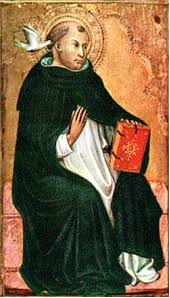
Thomas Aquinas's theories synthesize Aristotelian philosophy with Christian theology, most notably through his Natural Law theory, which posits that humans can discern God's moral order through reason by observing nature's purpose (telos) for thriving, leading to laws (eternal, divine, natural, human) and virtue ethics aimed at ultimate happiness (beatitude with God).
Dedication
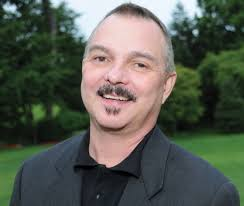
This essay is dedicated in friendship and gratitude to Rick Garcia. Friend, Collaborator, Cohort in getting into Good Trouble and a servant of God, who walked and witnessed his faith unconditionally and on behalf of all.
I am a better priest because of him and I trust he will continue to intercede (and campaign) on our behalf.
Beginning this year, September 15th, our Liturgical Calendar will add Rick as a perpetual Memorial.
May his soul and those of all the departed, through the Mercy of God, Rest in Peace.
With gratitude to
The Most Reverend Mark J. Schwarz
&
Professor Robert Perkovich
for their invaluable impute and suggestions.
“A Welcoming Community of Faith Rooted in the Catholic Tradition”
©2026
